A C&D dumpster rental is not the same as a general household cleanout bin. Construction debris, shingles, concrete block, tile, and dimensional lumber, is heavier per cubic yard than household junk, which is why…
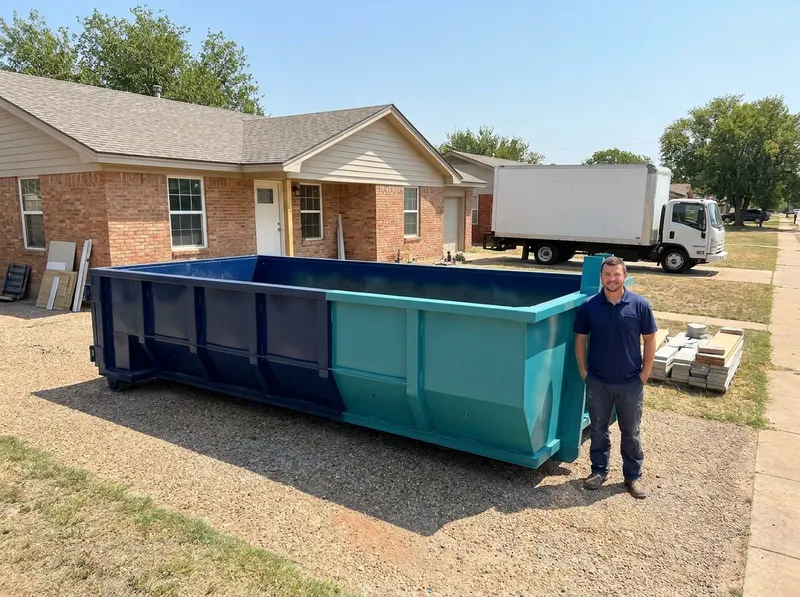
A C&D dumpster rental is not the same as a general household cleanout bin. Construction debris, shingles, concrete block, tile, and dimensional lumber, is heavier per cubic yard than household junk, which is why Binbridge Dumpster Rental prices these containers as flat, all-in rentals rather than base-rate-plus-tonnage. The quoted price is the total price. A homeowner tearing off a 1,500-square-foot roof in the Sunset Addition or a contractor demoing a kitchen in Tanglewood pays $595 for a 10-yard or $695 for a 20-yard and receives no surprise weight invoice at pickup.
Choosing the right size comes down to debris type and volume. A 10-yard container holds roughly 4 pickup-truck loads and fits a single-square roofing tear-off or a bathroom gut on a narrow lot in Floral Heights or McNiel Addition where driveway space is limited. A 20-yard handles a full kitchen-and-bath remodel or a two-square roofing job on a mid-size home in Sikes Estates or Country Club Estates. A 30-yard suits a whole-house interior demo, a full roofing project on a larger footprint near the Weeks Park area, or a commercial tenant improvement on a Kemp Boulevard corridor. A 40-yard is the right call for new construction framing waste, large commercial demolition near Sheppard AFB vicinity, or multi-trade jobs where concrete, lumber, and metal framing go into one bin. The trade-off between a 20-yard and a 30-yard is always driveway footprint versus debris volume, a 30-yard is roughly 22 feet long, which matters on the tighter lots in Midtown or Lakeside City.
Placement matters as much as size on a construction site. Wichita Falls city ordinances require a permit when a container sits on a public street or city right-of-way; placement on a private driveway or job-site pad avoids that step entirely. Binbridge Dumpster Rental drivers carry neighborhood-level knowledge of alley widths, overhead utility lines, and surface conditions across areas like the Sheppard AFB vicinity and older Midtown blocks, details that prevent a delivery from creating a second problem on top of the one being solved. If a permit is needed for street placement, confirming that requirement before delivery day keeps the project on schedule.
C&D containers accept concrete, brick, mortar block, asphalt shingles, wood framing, OSB, drywall, metal studs, roofing felt, tile, and mixed demolition debris. They do not accept hazardous materials, asbestos-containing products, liquids, tires, or electronics, Wichita County disposal facilities apply those restrictions at the gate, and any prohibited load returned to the site creates a delay and a redelivery cost. If a remodel uncovers suspected asbestos-containing tile or popcorn ceiling material in an older Wichita Falls home, common in structures built before 1980 in neighborhoods like Floral Heights, that material requires licensed abatement before it can go into any roll-off container.
Every job gets a firm, written price after a free on-site visit.
Tell us about your construction & c&d dumpster rental job in Wichita Falls and we'll send a clear, written quote, usually the same day.
 Binbridge Dumpster Rental